
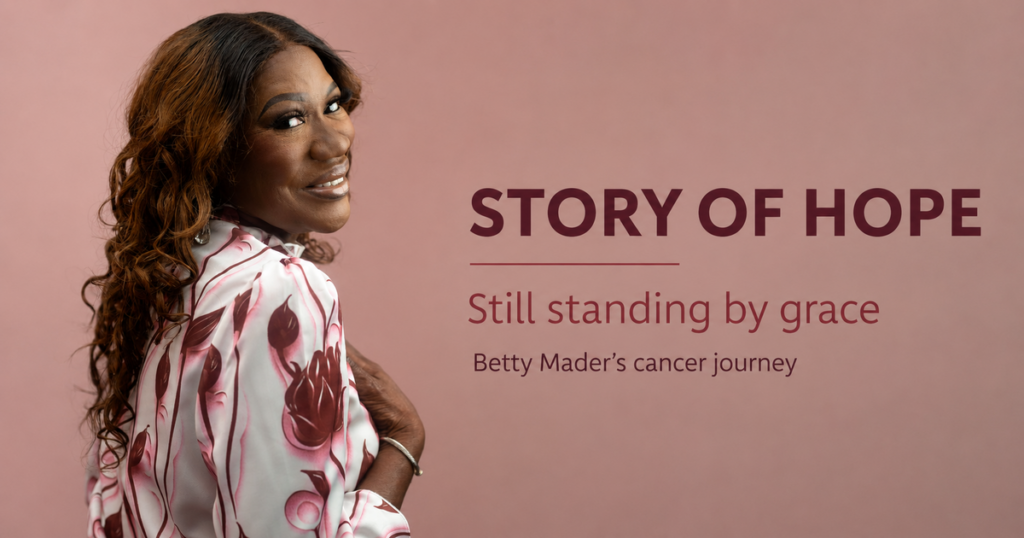
“I am still standing because God has held me in ways I didn’t even recognize at the time.”
– Betty Mader
A cancer diagnosis can change the rhythm of a life. Plans become appointments. Ordinary routines become uncertain. The body can feel unfamiliar, and the future can suddenly seem harder to picture.
But a diagnosis never tells the whole story of the person living through it. Betty Mader’s story begins long before cancer entered the picture, and it reaches far beyond treatment. It is the story of a mother and Nana, a trustee and Kingdom builder, a compassionate friend, a problem-solver, a listener, a planner, and a woman who loves people and travel. Those who know her describe her as supportive, honest, protective, empathetic, optimistic, thoughtful, and determined.
Cancer has affected her life, her body, her confidence, and her daily routines. It has also deepened her faith, clarified what matters most, and shown her a kind of strength she did not know she carried.
Before cancer, life moved at a familiar pace
Before her diagnosis, Betty was always on the go. She balanced responsibilities, stayed connected with friends, made plans, showed up for others, and handled whatever needed to be done. Like many of us, she assumed life would continue in that steady rhythm.
There were dreams for the future and ordinary responsibilities to manage. Health was not always at the front of her mind. The days felt normal, and normal felt dependable.
“Looking back, I realize how much I was simply living in the moment, without questioning it, and how much I took that sense of normalcy for granted.”
— Betty Mader
Her experience has since changed the way she understands those ordinary days. What once seemed routine now carries more meaning. Gratitude is deeper. Purpose feels clearer. Time is no longer something to assume will always be available later.
The discomfort she could no longer ignore
Betty’s journey began with discomfort in her jaw. It had been present for years, and she visited the dentist more than once. She was encouraged to have it checked more thoroughly, but at first, she did not fully recognize how important that follow-up could be.
Over time, the discomfort became harder to dismiss. Something did not feel right, even if she could not explain exactly what it was. Eventually, she knew she needed to take the next step and have it properly investigated.
“That was the moment everything began to shift from something I could put off to something I could no longer ignore.”
— Betty Mader
Hearing the diagnosis brought fear and disappointment, but hope was present too. In those early days, the unknown weighed heavily. Betty prayed honestly, brought her questions to God, and found reassurance in believing that she would not have to walk the road alone.
The parts of treatment people do not always see
For Betty, chemotherapy has been one of the hardest parts of the journey. Its effects do not stay inside the treatment room. They reach into daily tasks, eating, emotions, plans, finances, and the simple ability to know what the body will be capable of from one day to the next.
Treatment has changed what she can eat and, at times, whether she can keep food down. Activities have to be canceled. Commitments sometimes have to be broken, not because she does not care, but because she cannot predict how she will feel after treatment. The financial pressure adds another burden, while the emotional and psychological effects continue in ways other people may not notice.
“People don’t always realize cancer doesn’t end when treatment does. It stays with you mentally and emotionally.”
— Betty Mader
Even on a good day, fear and uncertainty can remain in the background. Cancer is not only a physical experience. It can change how a person thinks, feels, plans, relates to others, and sees the future. That is why genuine support cannot end when an appointment finishes or when treatment becomes less visible.
A smaller circle, but a stronger one
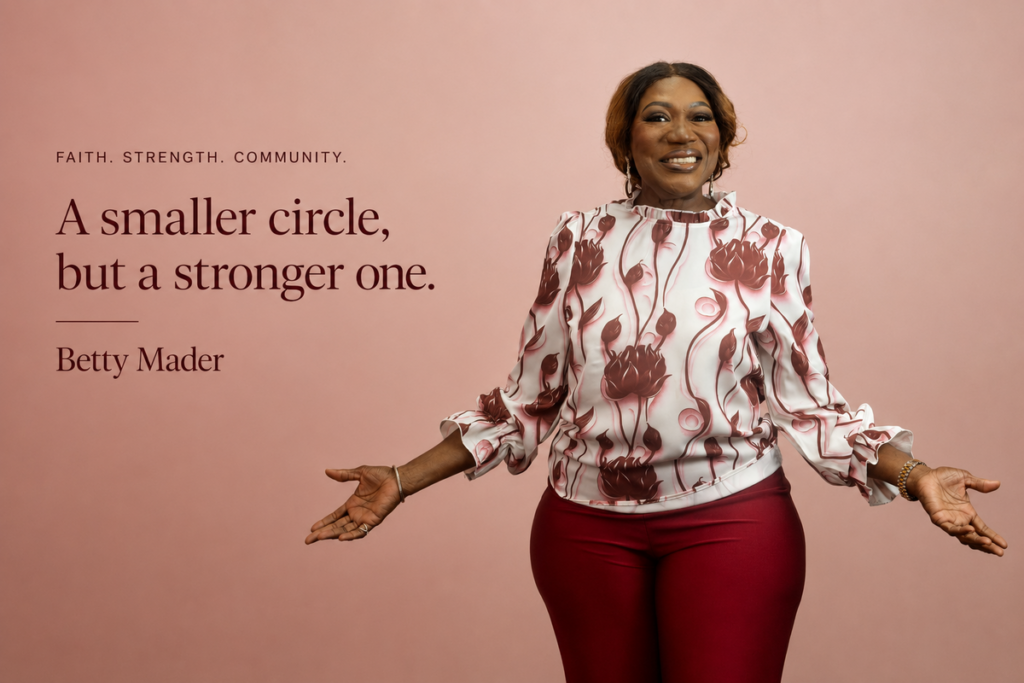
Hard seasons often reveal which relationships can hold the truth. Betty says her circle became smaller during her journey, but it also became stronger. She learned who would support her genuinely, listen without looking away, and remain present when life was no longer convenient or predictable.
Three things have helped carry her: faith, mindset, and community. Her faith has given her peace. Her mindset has helped her choose strength. Her community has reminded her that she is not alone.
Betty says she never reached a point where she wanted to give up. That does not mean the road has been easy. It means that, even in the hardest moments, she has continued to trust God’s process and take the next step available to her.
“There came a moment when I realized I was stronger than I thought, and everything shifted from fear to faith.”
— Betty Mader
Learning to see herself beyond the mirror
Because the cancer affected her jaw, the journey also changed how Betty saw herself as a woman. Changes to one side of her face affected her appearance and confidence. There were moments when she felt self-conscious and struggled with what she saw in the mirror.
Reconnecting with herself did not happen through pressure or forced positivity. It came through faith, prayer, reflection, support from loved ones, and the decision to give herself time. She began learning to accept changes she had never chosen and to value the strength of the body that continued carrying her.
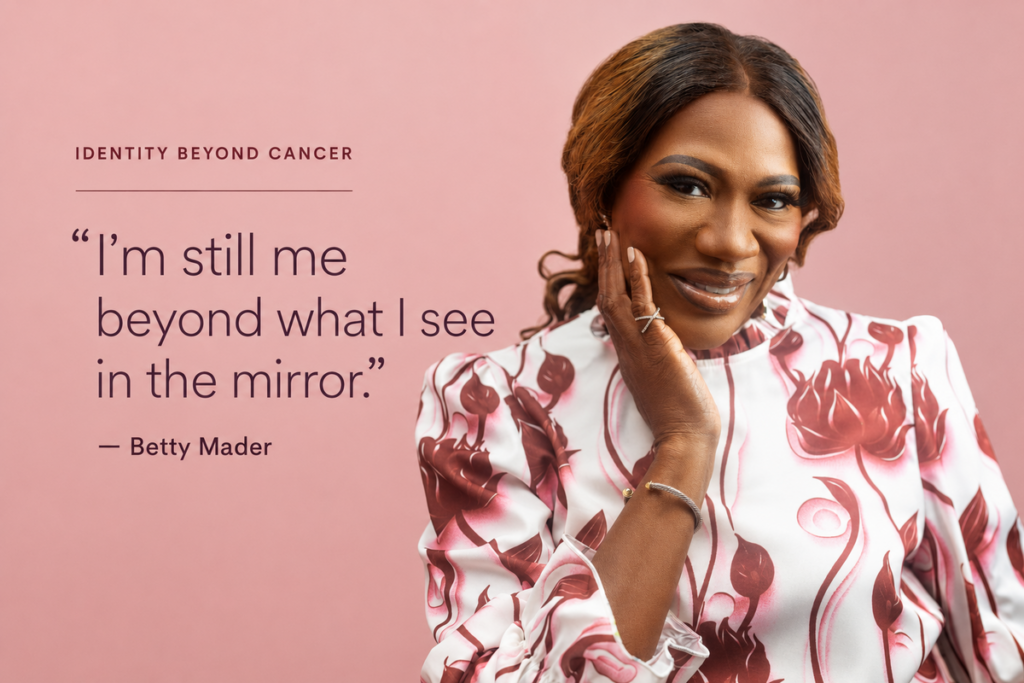
“I had to remind myself that I’m still me beyond what I see in the mirror.”
— Betty Mader
That truth matters. A changed body is still worthy of gentleness. Confidence may not return all at once, and healing does not require pretending that loss or change does not hurt. For Betty, it has meant giving herself grace while remembering that her identity is larger than her appearance and far larger than cancer.
What healing looks like now
Healing, for Betty, is not one finish line. It is physical, emotional, and spiritual. It is learning to live with peace and gratitude, trusting God more deeply, and being gentle with herself as she moves forward.
A good day is no longer measured by how much gets done. It is a peaceful day: feeling well, being present, spending time with God and loved ones, noticing simple things, and having enough strength to move through the day with calm and hope.
What makes her proud is not perfection. It is that she has kept going while the journey is still difficult. She is proud that she has not lost her faith and that she is learning to trust God through every part of the experience, including the parts she cannot understand.
What Betty wants others to understand
Cancer does not fit into one simple story. Words such as strong and brave may be well meant, but they do not capture the whole experience. There can be strength and fear, courage and exhaustion, gratitude and grief, sometimes in the same day.
See the whole person
Cancer patients, warriors, and survivors still have humor, dreams, relationships, responsibilities, and identities beyond illness. A diagnosis changes many things, but it does not erase the person.
Choose presence over perfect words
You do not need a flawless speech to support someone. Listening, checking in, helping with practical needs, and staying present can mean more than trying to explain away the pain. Sometimes the most powerful thing you can do is simply refuse to look away.
Respect changing capacity
Treatment can make energy and plans unpredictable. A canceled commitment is not rejection. Offer flexibility without guilt, and keep the invitation open. Support feels safer when the person does not have to apologize for what their body cannot do that day.
Do not assume there is one right way to cope
Every experience is different. Some people want to talk; others need quiet. Some lean deeply on faith; others find strength elsewhere. Respecting each person’s needs, boundaries, and pace can make a meaningful difference.
“Cancer changes people, but it doesn’t erase them.”
— Betty Mader
Her message to a woman who has just been diagnosed
Betty’s message is tender, honest, and grounded in what she has lived:
“Take a breath and take it one day at a time. It’s overwhelming at first, but you are stronger than you feel in that moment. Lean on your faith, trust your process, and don’t be afraid to ask for help. You are still you, and you will find your way through this.”
— Betty Mader
Her words do not deny how frightening a diagnosis can be. They make room for fear while reminding the person that help is allowed, identity remains, and the entire future does not have to be solved today.
Hope is quieter now, but deeper
Betty no longer understands hope as a guarantee that everything will unfold exactly as she wants. Hope is trust in the middle of uncertainty. It is waking up and believing that the day is still held in God’s hands. It is noticing a steady breath, a moment of unexpected peace, or the people who continue to show up.
Hope does not ask her to ignore fear or pretend everything is fine. It allows fear and faith to exist together and gives both to God. On days when her own hope feels small, others help carry it. On stronger days, she can share that same light with someone else.
“Hope, now, is not fragile. It is rooted. It bends, it stretches, but it does not break, because it is anchored in Him.”
— Betty Mader
She is still believing that God is not finished with her. She believes there is purpose in her life, meaning in her story, and more grace, healing, and light ahead. If sharing her experience helps even one person feel less alone in a difficult valley, she believes the story has already done something worthwhile.
Still standing
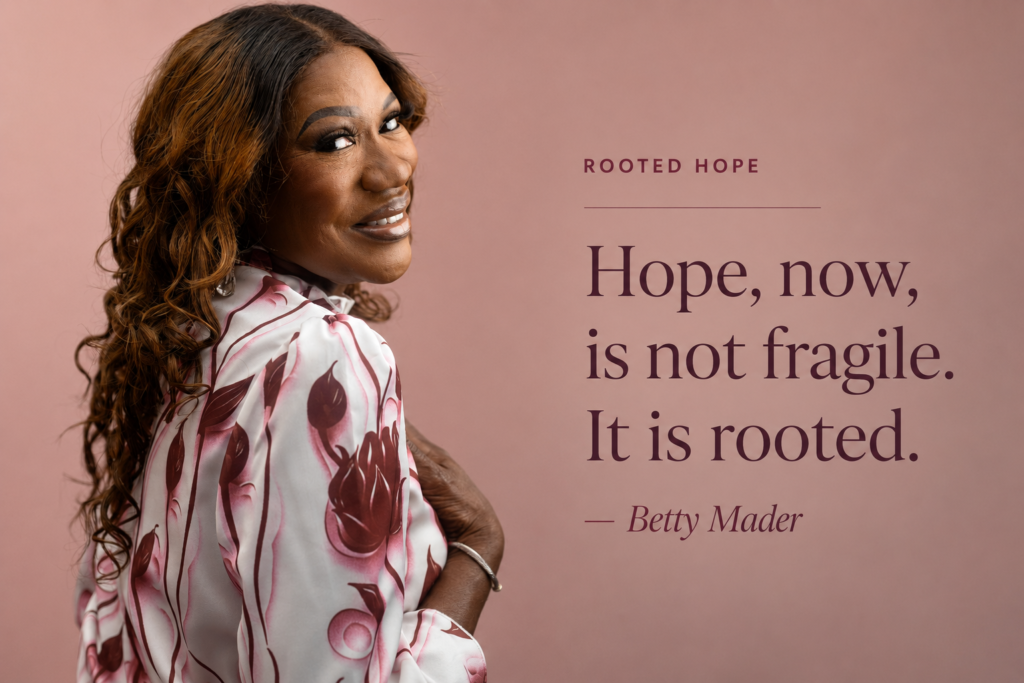
Betty does not want her story to point to perfection. She wants it to point to grace: the kind that holds a person when they cannot hold themselves, meets them in broken places, and rebuilds quietly over time.
“I am still standing not because everything has been easy, but because I have not been left alone in any of it.”
— Betty Mader
That may be the clearest truth of her journey. Strength is not always loud. Sometimes it looks like surrender. Sometimes it is asking for help instead of withdrawing. Sometimes it is keeping one appointment, accepting one changed plan, saying one honest prayer, or taking one more step when the whole road feels too heavy.
Betty is still here. Still believing. Still becoming. Still standing by grace. And her story reminds us that cancer may change a life, but it cannot erase identity, love, faith, purpose, or the power of being held by a caring community.
You do not have to walk this journey alone
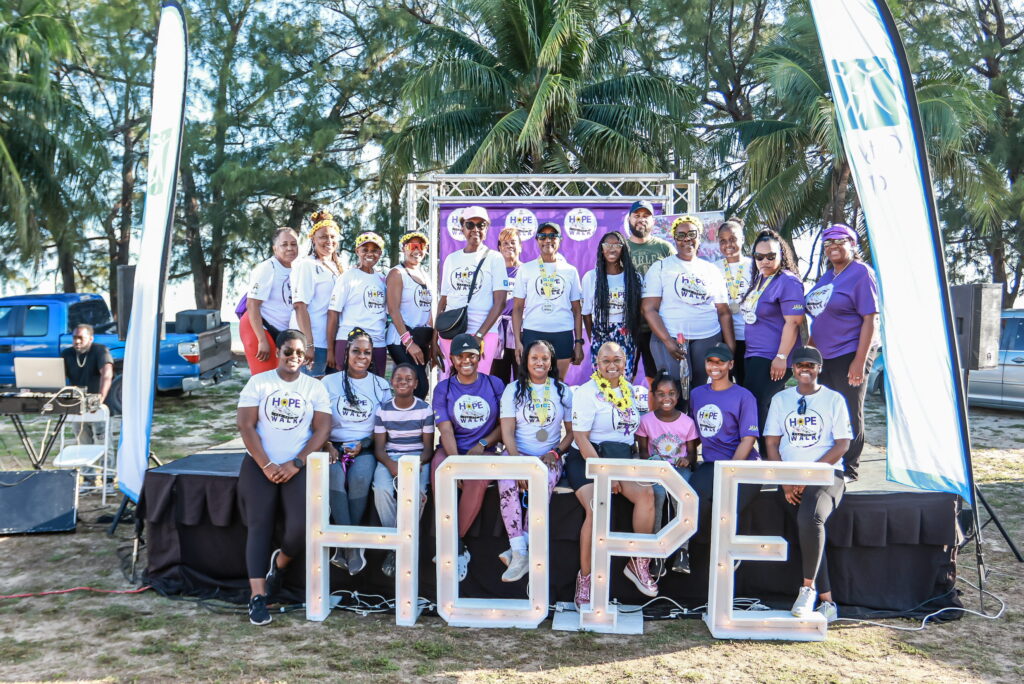
If you are living with cancer, supporting someone through treatment, or adjusting to life after treatment, Gennie Dean Caring and Sharing Cancer Support Group is here to listen and help you find connection. Our community supports cancer patients, warriors, survivors, and their families through the physical, emotional, and spiritual parts of the journey.
Reach out for support
Call: +1 242-802-6012
Email: support@gdcancersupportgroup.com
Visit our contact page